
Start here if you want one patristic classic, not a whole library.
On the Incarnation
Athanasius of AlexandriaShort, readable, and central: why God became man, written from inside the Nicene fight.
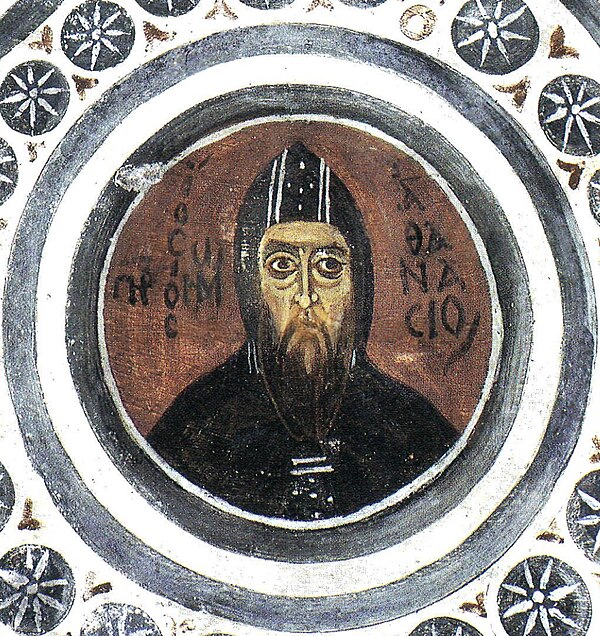
Bishop of Alexandria and chief defender of Nicene orthodoxy against Arianism. Five times exiled. Wrote On the Incarnation and the Vita Antonii.
Athanasius spent forty-five years as bishop of Alexandria and was exiled five times for refusing to compromise on the divinity of Christ. When the empire wanted unity-at-the-cost-of-doctrine, he chose doctrine and lost everything. He had attended the Council of Nicaea in 325 as a young deacon and secretary to Bishop Alexander; he did not call the council, but after it chose homoousios ('of one substance') he became the council's fiercest defender. The point was simple and enormous: if the Son is not truly God, the gospel cannot say that God himself has come to save us. That is why the Creed says the Son is 'one in being with the Father' rather than a created being close to God. Read On the Incarnation next: it is short, clear, and still the best first answer to 'why did God become man.' C.S. Lewis loved it enough to write the famous introduction, where he advised reading one old book for every three modern ones.
A cover-visible starting point chosen from the curated reading path, either by this figure or by their era.
Short, readable, and central: why God became man, written from inside the Nicene fight.
Loading…
Short, clear classic on why God became man; modern editions often include C.S. Lewis's famous introduction.
Hagiography of the desert father Antony — the founding text of monastic literature.
Defense of his actions during exile; primary source for the post-Nicene Arian crisis.
First sustained patristic argument for the Spirit's full divinity; preceded Basil.
As an Amazon Associate we earn from qualifying purchases.