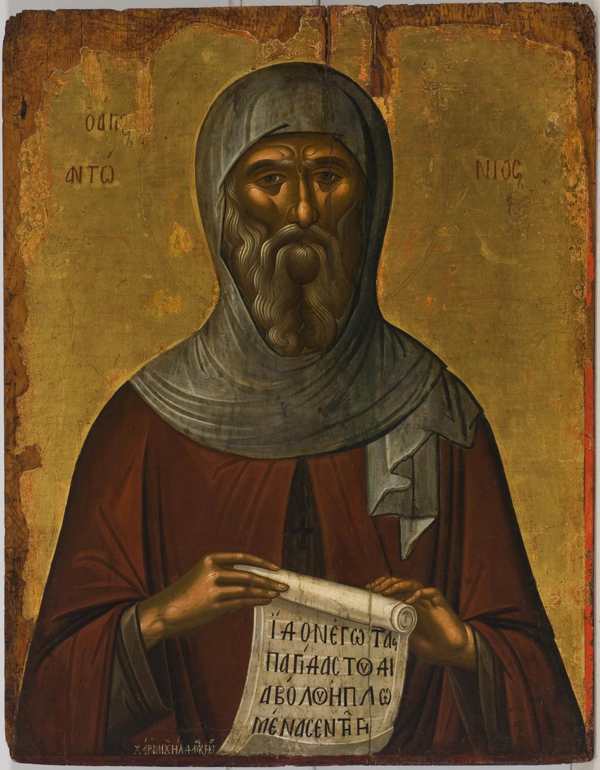
Anthony the Great
Father of Christian monasticism; Egyptian hermit whose life was written by Athanasius. Withdrew to the desert c. 285 and helped pattern the eremitic life.
Why Anthony the Great matters
Anthony went into the Egyptian desert around AD 270 to be alone with God, and against his intention started a movement. Within fifty years there were thousands of monks living in cells in the desert, and the church had a new option besides bishop or martyr: monk. Athanasius's Life of Antony made him famous across the empire — Augustine read it and converted partly because of it. Every Christian monastic tradition, East and West, traces back to one Egyptian peasant who decided to live alone with God.
Chain to Jesus
Loading…
Common questions
- Who was Anthony the Great?
- Anthony the Great (251–356) — Father of Christian monasticism; Egyptian hermit whose life was written by Athanasius. Withdrew to the desert c. 285 and helped pattern the eremitic life.
- Who did Anthony the Great teach?
- Macarius of Alexandria.
Works
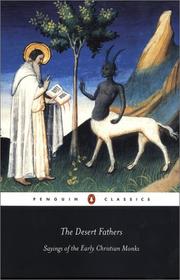
- Sayings of the Desert Fathersc. 300
Collected sayings of Antony and the Egyptian desert fathers.
As an Amazon Associate we earn from qualifying purchases.
Sources for biography
- Athanasius, Vita Antonii primary
- Jerome, De Viris Illustribus 88 primary
- Apophthegmata Patrum (Anthony) primary
documented connections(2)
- knew of (incoming) Athanasius of AlexandriaAthanasius wrote the Vita Antonii and reports having served Anthony personally.Athanasius, Vita Antonii (preface)
- knew of Athanasius of AlexandriaAnthony visited Alexandria in support of Athanasius against the Arians (338).Athanasius, Vita Antonii 69-71
tradition connections(3)
- knew of (incoming) Pachomius the GreatPachomius is depicted as familiar with the Antonian model though they did not directly meet.Vita Prima Pachomii 120
- taught by (incoming) Macarius of AlexandriaPalladius reports Macarius of Alexandria as a disciple of Antony; the relationship is preserved in the desert-father tradition rather than in a contemporary document.Palladius, Historia Lausiaca 18
- succeeded in see (incoming) Sisoes the GreatSisoes settled on Antony's mountain (Mount Colzim) after Antony's death; this is a hagiographic succession of place rather than an episcopal see, but is the standard tradition. Use with caution.Apophthegmata Patrum, alphabetical collection s.v. Sisoes 1, 28