← Lineage

Start here

New to all this? Read this once, then go play with the timeline.

What is this site?

A map of the human chain that carried Christianity from Jesus to the early Middle Ages — AD 30 to 750. Each person on the timeline is a real historical figure. Each line between them is a relationship — they taught each other, wrote letters, were ordained by, met, opposed each other. Every claim is sourced.

The point is to make a thing that's usually presented as a list of names feel like what it actually was: a relay race. People who knew each other, taught each other, argued with each other, sometimes died for what the previous person handed down.

Who are the Church Fathers?

The Church Fathers (in Latin, Patres — hence "patristic") are the major Christian theologians, bishops, and writers of roughly the first seven centuries. Catholic tradition requires four things to formally count as a Father: antiquity, holiness of life, orthodoxy of doctrine, and church approval. In practice the term is used more loosely.

The patristic age is conventionally said to end with John of Damascus, who died around 749. Before him, Christian theology was done by bishops in cities arguing with heretics. After him, it gets done by professors in universities arguing with each other. We end the site there.

We also include figures who weren't orthodox — Arius, Nestorius, Marcion — because you can't tell the story of orthodoxy without the figures it defined itself against. We flag them clearly.

The eras at a glance

Apostolic age (AD 30 – 100)
Jesus, the Twelve, Paul. The New Testament is written.
Apostolic Fathers (100 – 150)
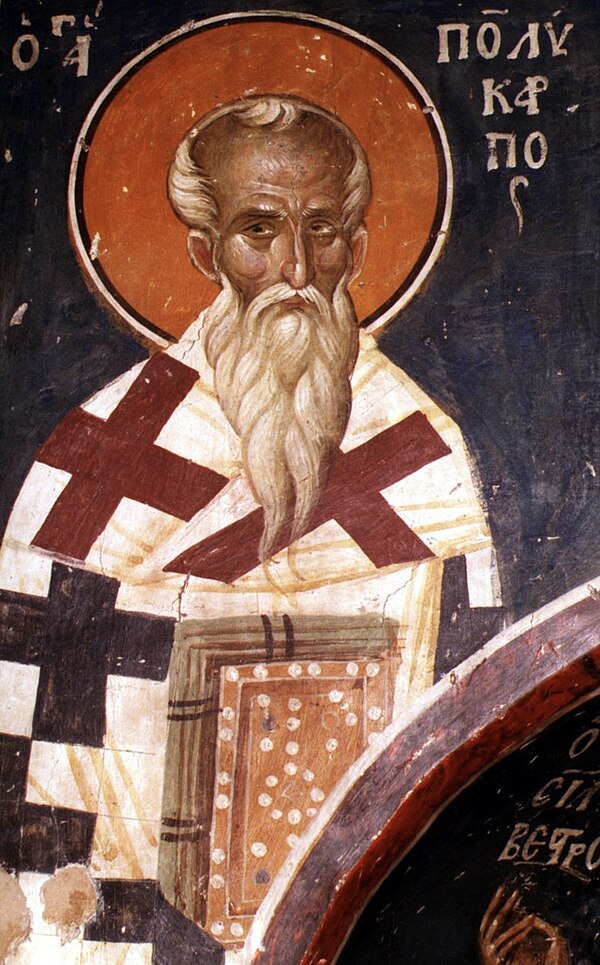
The generation that personally knew the apostles or their immediate students. Polycarp, Ignatius, Clement of Rome.
Apologists & Ante-Nicene (150 – 325)
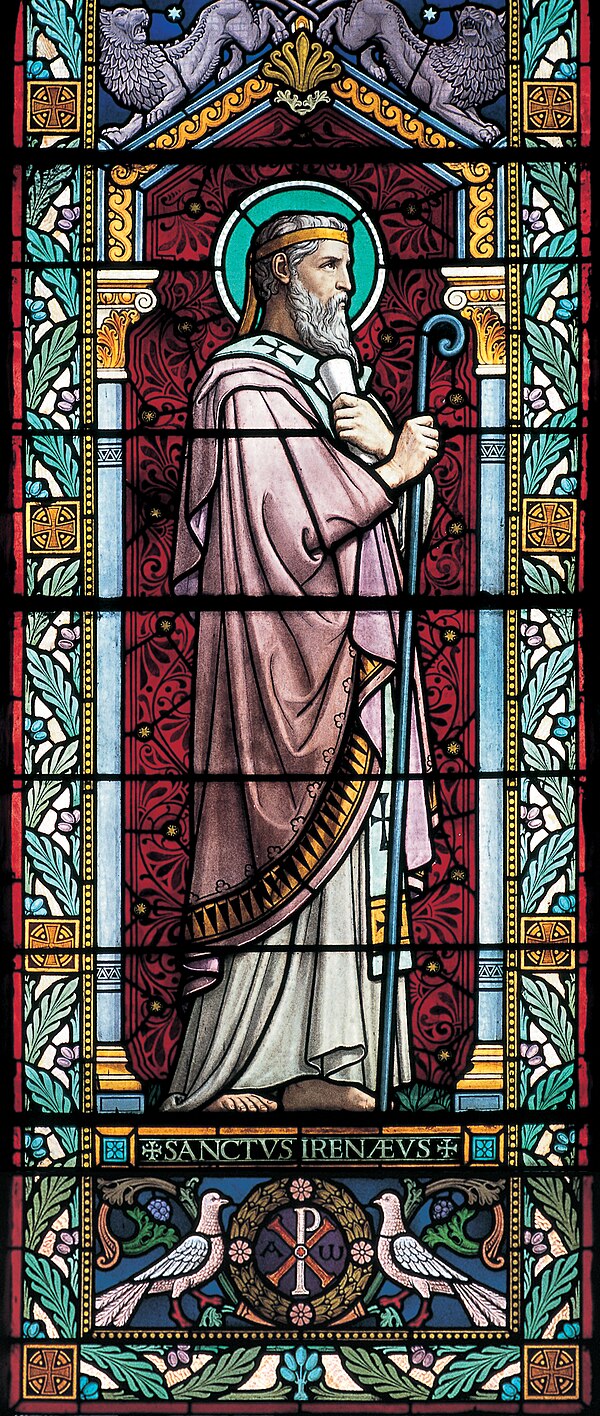
Christianity defends itself in writing against pagans and heretics. Justin Martyr, Irenaeus, Tertullian, Origen, Cyprian. Persecutions throughout. Ends when Constantine calls the Council of Nicaea in 325.
Nicene & Post-Nicene (325 – 451)
Christianity is now legal, then official. The great councils settle the Trinity (325, 381) and Christology (431, 451). Athanasius, Ambrose, the Cappadocians, Augustine, Jerome, Chrysostom.
Late Patristic & Early Medieval (451 – 750)
The Western Roman Empire collapses. Theology gets carried by monks and bishops. Gregory the Great, Maximus the Confessor, Bede, John of Damascus.

Words you'll see and what they mean

Patristic
"Of the Fathers." A patristic theologian is one of these early Fathers. The patristic age is the era of the Fathers.
See
The city a bishop is bishop of. "Bishop of Carthage" = the bishop whose see is Carthage. "The Roman see" = the bishopric of Rome.
Episcopal succession
The chain of bishops in a single see. "Bishop A, then Bishop B, then Bishop C — each ordained by the previous." Catholic and Orthodox Christianity treat this as a guarantee of doctrinal continuity going back to the apostles.
Apostolic succession
The bigger claim that bishops form an unbroken chain back to one of the apostles. Different from "transmission" in general (see below).
Transmission (vs succession)
Any way a teaching gets passed down — letters, citation, teacher → student, formal ordination, casual influence. Succession is one specific kind of transmission. On figure pages you can switch the chain to see only one type at a time.
Documented / tradition / disputed
How strong the evidence is for a relationship. Documented = a primary source from antiquity attests it directly. Tradition = the link is attested only by later writers (Jerome's De Viris, hagiographies). Disputed = modern scholarship contests it. We mark every link with one of these three. Most popular Christian sites don't do this and you should be suspicious of ones that don't.
Primary source
Something written by the person themselves or by a contemporary. Polycarp's letter to the Philippians is a primary source for Polycarp. Jerome writing about Polycarp 250 years later is a secondary source.
Heresy / orthodoxy
Orthodoxy is what the church eventually decided was the correct teaching; heresy is what got rejected. The boundary was usually drawn during a specific controversy: Arianism (the divinity of Christ), Pelagianism (sin and grace), Nestorianism (how Christ is one person), and so on. Most heresies are named after the person whose teaching defined them.
Council
A formal meeting of bishops. Ecumenical means universal — the whole church. Seven ecumenical councils are recognised by Catholic, Orthodox, and most Protestant traditions: Nicaea I (325), Constantinople I (381), Ephesus (431), Chalcedon (451), Constantinople II (553), Constantinople III (680), Nicaea II (787). They set the creeds and rejected the major heresies.
Doctor of the Church
Catholic title for a Father whose teaching is considered especially authoritative. The four original Western Doctors: Ambrose, Augustine, Jerome, Gregory the Great. Four original Eastern Doctors: Athanasius, Basil, Gregory of Nazianzus, John Chrysostom.
Anathema
A formal curse / excommunication. Councils end with lists of anathematised positions — "if anyone says X, let him be anathema." That's how heresies got formally ruled out.
Anno Domini (AD)
"In the year of the Lord." We use AD throughout because it's the convention the Fathers themselves used (well — Bede invented it). Same as "CE" if that's what you grew up on.

How to use this site

  • Hover any name on the timeline to highlight their lineage temporarily.
  • Click to lock the lineage. The chain to Jesus is then traceable across the centuries; everything else dims.
  • Double-click to open the full page for that figure.
  • On a figure page, the Chain to Jesus section lets you switch routes: all transmission (default), pedagogical only, episcopal succession only, or documented only. Same person, four different views of how their tradition reached them.
  • On the network graph, hold ⌘ / Ctrl + scroll to zoom; drag to pan. Buttons top-right do the same thing without the modifier.

Where to start reading

If you're going to read one Father this year, read Athanasius's On the Incarnation. It's about 100 pages. C.S. Lewis wrote the introduction for the standard edition specifically because he thought everyone should read it.

If you want autobiography, read Augustine's Confessions in the Pine-Coffin Penguin translation. It's the founding text of spiritual autobiography in the West.

If you want the early generation, read the Apostolic Fathers — Holmes' edition includes Clement, Ignatius, Polycarp, and the Didache. About 300 pages of the second-century church in their own words.

Each figure page has a Works section with the edition we'd recommend. Buying through those links supports the site.

A note on honesty

A lot of what people say about the early church is more confident than the evidence supports. We try to mark exactly how confident you should be about each link — and we spell out the methodology so you can disagree with our calls. The data is open, every claim is sourced, the JSON is on GitHub.

If you spot something wrong, tell us. Better to be corrected than wrong.