Athanasius of Alexandria
c. 296 – 373 · Bishop of Alexandria
Also known as Athanasius the Great
Feast: 2 May (Catholic) · 18 January (Orthodox)
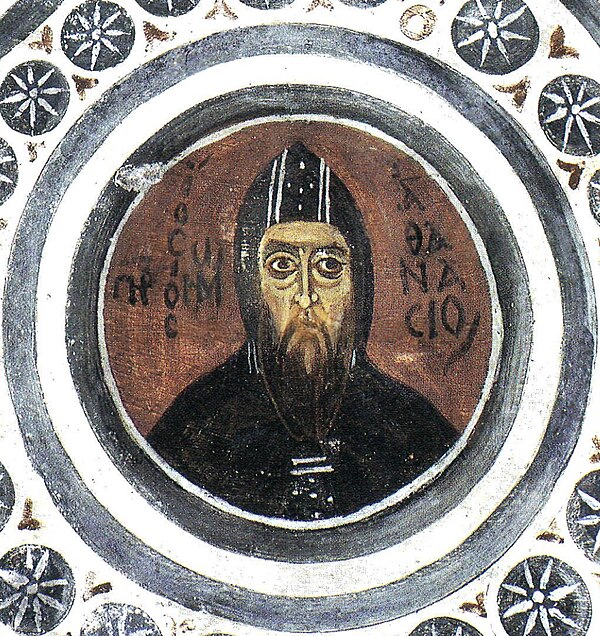
Bishop of Alexandria and chief defender of Nicene orthodoxy against Arianism. Five times exiled. Wrote On the Incarnation and the Vita Antonii.
Highlights
- Main contribution
- Athanasius spent forty-five years as bishop of Alexandria and was exiled five times for refusing to compromise on the divinity of Christ.
- Event connection
- First Council of Nicaea (325)
- Best first read
- On the Incarnation
- Primary source
- Athanasius, Apologia contra Arianos
Athanasius spent forty-five years as bishop of Alexandria and was exiled five times for refusing to compromise on the divinity of Christ. When the empire wanted unity-at-the-cost-of-doctrine, he chose doctrine and lost everything. He had attended the Council of Nicaea in 325 as a young deacon and secretary to Bishop Alexander; he did not call the council, but after it chose homoousios ('of one substance') he became the council's fiercest defender. The point was simple and enormous: if the Son is not truly God, the gospel cannot say that God himself has come to save us. That is why the Creed says the Son is 'one in being with the Father' rather than a created being close to God. Read On the Incarnation next: it is short, clear, and still the best first answer to 'why did God become man.' C.S. Lewis loved it enough to write the famous introduction, where he advised reading one old book for every three modern ones.
Notable works
- ·On the Incarnation · 318
- ·Life of Antony · 360
- ·Apology Against the Arians · 350
- ·Letters to Serapion on the Holy Spirit · 360
Primary sources
- ·Athanasius, Apologia contra Arianos
- ·Athanasius, Vita Antonii
- ·Socrates Scholasticus, Hist. Eccl. 1-2
- ·Jerome, De Viris Illustribus 87

Book of the day
On the Incarnation
Athanasius of AlexandriaA reading pick tied to today's figure, quote, era, or event. Short, readable, and central: why God became man, written from inside the Nicene fight.
Daily Patristic Wisdom in your inbox
Get one early Church quote each morning, with historical context in plain English. Free. Unsubscribe whenever.