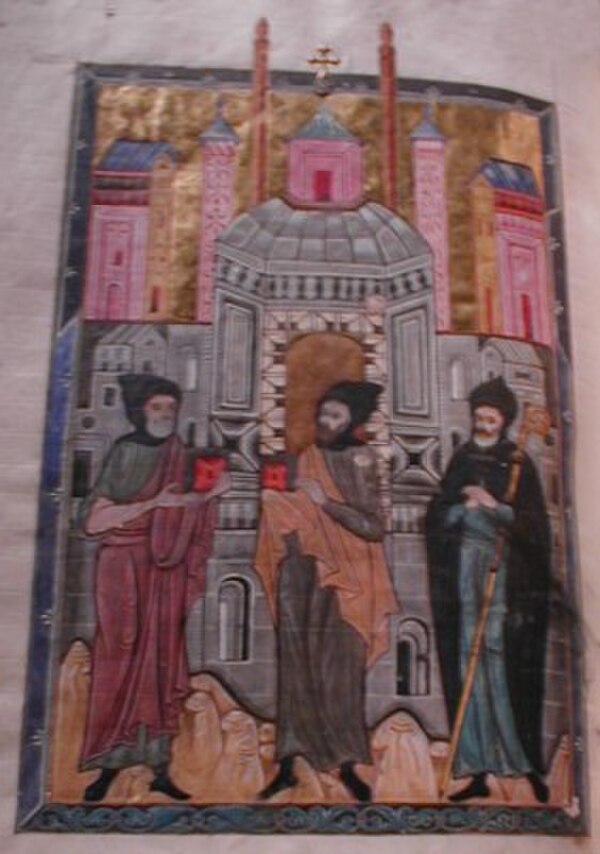
Portrait of Evagrius Ponticus
via Wikipedia

Evagrius Ponticus

345 – 399 · b. Ibora
MonkTheologian

Quick facts

Born
345, Ibora
Died
399, Kellia
Region
egypt
Era
desert father
Significance
Major Father(3/4)
Also known as
Evagrius the Solitary

Highlights

Main contribution
Evagrius gave monks a vocabulary for the mind at prayer.
Primary source
Evagrius, Praktikos

Pontic monk in the Egyptian desert. Pioneer of systematic monastic theology (Praktikos, Chapters on Prayer); originated the eight 'logismoi' that became the seven deadly sins.

Why Evagrius Ponticus matters

Evagrius gave monks a vocabulary for the mind at prayer. In the Egyptian desert, he named the eight logismoi, or tempting thoughts, that disturb the soul; Gregory the Great later reworked that tradition into the seven deadly sins. He also wrote with unusual precision about attention, desire, anger, boredom, contemplation, and the struggle to pray honestly. Some of his Origenist theology was later condemned, but his practical psychology kept moving through Cassian and the wider monastic tradition.

Recommended reading near Evagrius Ponticus

A cover-visible starting point chosen from the curated reading path, either by this figure or by their era.

More books →
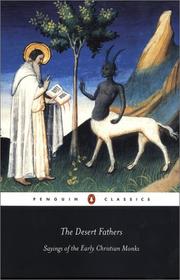
Cover of The Desert Fathers, translated by Benedicta Ward
Start here if doctrine pages feel too abstract.

Sayings of the Desert Fathers

Anthony the Great

Short sayings from Egyptian monasticism: memorable, strange, practical, and easy to read in small doses.
Chain to Jesus

Loading…

Common questions

Who was Evagrius Ponticus?
Evagrius Ponticus (345–399) — Pontic monk in the Egyptian desert. Pioneer of systematic monastic theology (Praktikos, Chapters on Prayer); originated the eight 'logismoi' that became the seven deadly sins.
Who taught Evagrius Ponticus?
Gregory of Nazianzus, Macarius the Great, and Basil of Caesarea.
Who did Evagrius Ponticus teach?
John Cassian and Palladius of Galatia.
Who did Evagrius Ponticus correspond with?
Melania the Elder.

Works

  • Praktikos and Chapters on Prayerc. 390

    Foundational texts of Christian contemplative theology — the seedbed of the Seven Deadly Sins.

As an Amazon Associate we earn from qualifying purchases.

Sources for biography

  • Evagrius, Praktikos primary
  • Palladius, Historia Lausiaca 38 primary
  • Socrates Scholasticus, Hist. Eccl. 4.23 primary

documented connections(6)

  • Gregory ordained Evagrius deacon and trained him at Constantinople.
    Palladius, Historia Lausiaca 38 · Socrates Scholasticus, Hist. Eccl. 4.23
  • Evagrius sat at the feet of Macarius the Great and Macarius the Alexandrian in the desert (Palladius, contemporary).
    Palladius, Historia Lausiaca 38
  • taught by (incoming) Palladius of Galatia
    Palladius lived with Evagrius for nine years in the desert.
    Palladius, Historia Lausiaca 23, 38
  • Basil ordained Evagrius lector at Caesarea.
    Palladius, Historia Lausiaca 38
  • cited (incoming) John Climacus
    The Ladder of Divine Ascent depends pervasively on Evagrian ascetic psychology (the eight logismoi, apatheia) though it carefully avoids Evagrius's name; the dependence is uncontroversial in scholarship.
    John Climacus, Ladder of Divine Ascent, steps 13-15, 26 · Chryssavgis, John Climacus: From the Egyptian Desert to the Sinaite Mountain (Ashgate 2004), ch. 4
  • corresponded (incoming) Melania the Elder
    Palladius records Melania the Elder as a patron and correspondent of Evagrius at Kellia.
    Palladius, Historia Lausiaca 38, 46

tradition connections(1)

  • taught by (incoming) John Cassian
    Cassian's Conferences transmit Evagrian monastic doctrine, though Cassian never names him.
    Cassian, Collationes (passim)

External resources

·XFacebookRedditEmail