Council · 451 · 8 October
Council of Chalcedon
Christians agreed that Jesus is God and human, but disagreed about how to say both without weakening either truth. Some explanations seemed to split Jesus in two; others seemed to make his humanity disappear into his divinity. Chalcedon gave the formula that became central for Catholic, Orthodox, and most Protestant Christians: Jesus Christ is one person, fully God and fully human. It did not solve every disagreement, but it set a lasting boundary for how Christians speak about Jesus.
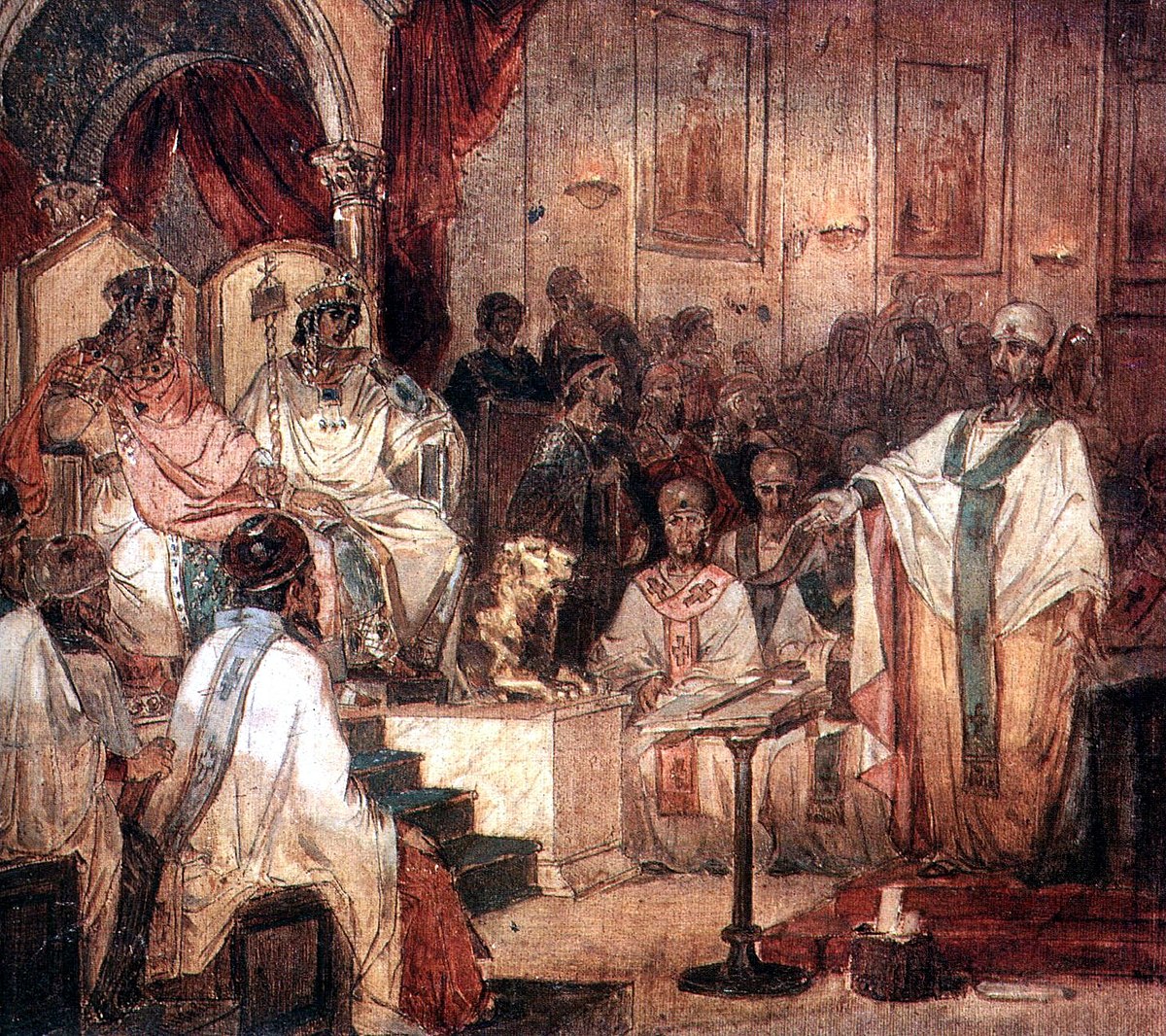
At a glance
- Type
- Council
- Date remembered
- 8 October, AD 451
- What kind of event is this?
- A council or settlement that changed the church's public teaching, discipline, or historical direction.
- Key line
- One person in two natures, without confusion or division.
Highlights
- Leo's letter was received.
- Eutyches' teaching was rejected.
- The council defined Jesus as fully God and fully human.
- Some Eastern churches did not accept the definition.
How it happened
What happened
Bishops met at Chalcedon after the Eutychian controversy and the disputed Second Council of Ephesus.
The argument
Could Christ's humanity and divinity be confessed without either dividing him or blending his natures?
What changed
The council defined Christ as one person in two natures, divine and human.
Why it matters
Chalcedon became the main guardrail for saying that Jesus is fully God, fully human, and one Lord.
Aftermath
Many Egyptian, Syrian, Armenian, and Ethiopian Christians rejected Chalcedon, creating divisions that still remain.
People in the story
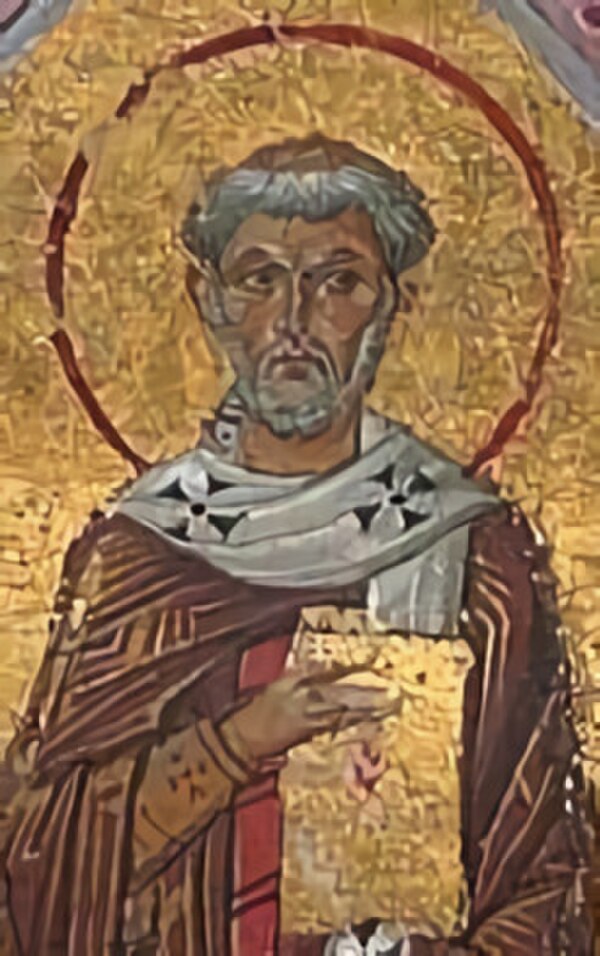 Pope Leo Ic. 400 – 461Bishop of Rome 440-461. His Tome (Epistula 28) was acclaimed at the Council of Chalcedon (451). Negotiated with Attila in 452.
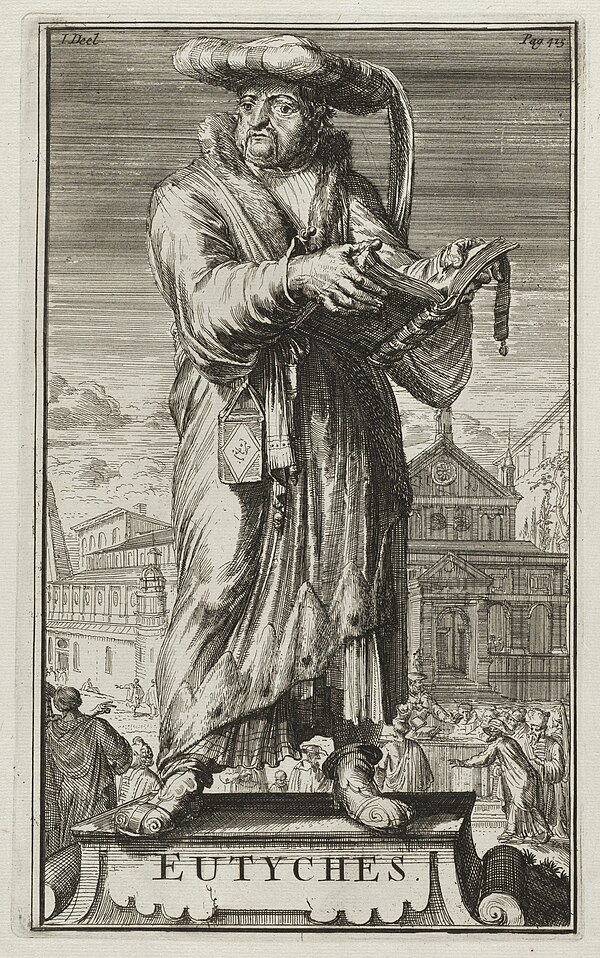 Eutychesc. 380 – c. 456Archimandrite at Constantinople whose monophysite teaching ('one nature after the union') was condemned at the Home Synod (448) and at Chalcedon (451). Heretic.
Recommended reading
Primary texts from figures tied to this event.
Pope Leo I
Tome (Letter to Flavian) · 449
Christological letter that decisively shaped the Council of Chalcedon (451).
Pope Leo I
Sermons · 450
Ninety-six sermons — concise, classical Latin preaching by a master pastor.