← Lineage
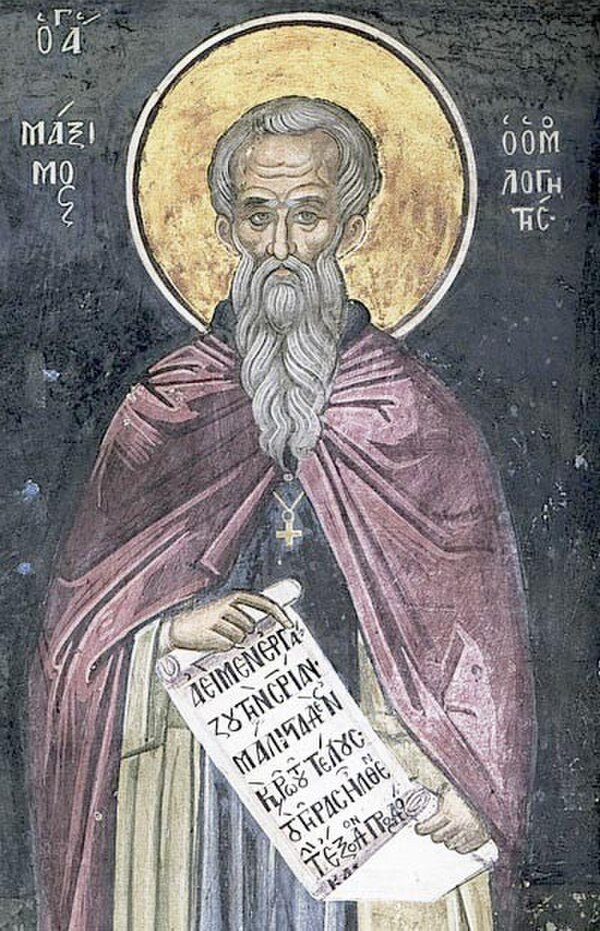
Portrait of Maximus the Confessor
via Wikipedia

Maximus the Confessor

c. 580 – 662 · b. Constantinople
monktheologianmartyr

Greek monk and the principal theological opponent of Monothelitism. Defended two wills (divine and human) in Christ. Tried, mutilated (tongue and right hand cut off), and exiled by Constans II. Major systematizer of Greek patristic theology; deep influence on John of Damascus and later Byzantine theology.

Why Maximus the Confessor matters

Maximus had his right hand cut off and his tongue cut out by Byzantine imperial agents because he wouldn't accept a compromise on Christology. He died in exile on the Black Sea coast. His theology is dense — most people find Maximus the hardest of all the Fathers — but it's also the high water mark of Eastern Christian thought. Every later Orthodox theologian, and most Catholic theologians who took the East seriously, treated him as the test case. The fact that he was tortured by Christians for his theology is a fact the church has never quite known what to do with.

Chain to Jesus

Loading…

Common questions

Who was Maximus the Confessor?
Maximus the Confessor (580–662) — Greek monk and the principal theological opponent of Monothelitism. Defended two wills (divine and human) in Christ. Tried, mutilated (tongue and right hand cut off), and exiled by Constans II. Major systematizer of Greek patristic theology; deep influence on John of Damascus and later Byzantine theology.
Who did Maximus the Confessor correspond with?
Pope Martin I.
Who did Maximus the Confessor oppose?
Constans II.

Works

  • Ambiguac. 634

    Difficulties from Gregory of Nazianzus and Pseudo-Dionysius — the apex of Byzantine theological synthesis.

  • Centuries on Charityc. 626

    Four centuries of contemplative aphorisms widely read in the Philokalia tradition.

As an Amazon Associate we earn from qualifying purchases.

Sources for biography

  • Maximus, Opuscula Theologica et Polemica primary
  • Maximus, Ambigua primary
  • Maximus, Mystagogia primary
  • Relatio Motionis (Trial of Maximus) primary

documented connections(5)

  • Maximus wrote scholia on the Dionysian corpus (transmitted with John of Scythopolis' scholia) and integrated Dionysian theology into his own.
    Maximus, Ambigua ad Iohannem · Scholia in Corpus Areopagiticum
  • corresponded Pope Martin I
    Maximus collaborated with Martin in preparing and defending the Lateran Council of 649; both were arrested by Constans II.
    Acta Concilii Lateranensis (649) · Relatio Motionis
  • Maximus revered Sophronius as his spiritual master and mentor in opposing Monothelitism.
    Maximus, Opusc. 12 (PG 91, 142) · Maximus, Epistola 13
  • opposed Constans II
    Maximus refused to accept the Typos and was tried, mutilated, and exiled by Constans II.
    Relatio Motionis · Disputatio Bizyae
  • cited (incoming) John of Damascus
    John of Damascus' Christology in De Fide Orthodoxa depends heavily on Maximus' formulations.
    John of Damascus, De Fide Orthodoxa 3 · Louth, St John Damascene, Oxford 2002, ch. 6

tradition connections(1)

  • Maximus (d. 662) draws on Sinaitic ascetic literature; Climacus (d. c. 649) is older. Direct quotation is not formal but Maximus's spiritual anthropology shares Climacus's framework.
    Louth, Maximus the Confessor (Routledge 1996), pp. 35-37

Read more