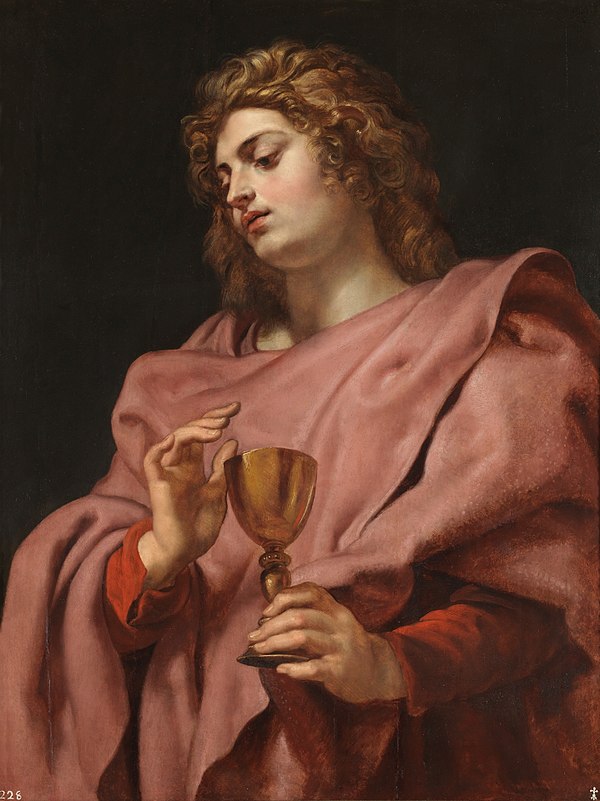
John the Apostle
c. 6 – c. 100 · b. Galilee · Bishop of Ephesus
ApostleBishop
Quick facts
- Born
- c. 6, Galilee
- Died
- c. 100, Ephesus
- See
- Ephesus
- Region
- asia minor
- Era
- apostle
- Significance
- Apostolic / Christ(4/4)
- Also known as
- John son of Zebedee · the Beloved Disciple
Highlights
- Main contribution
- John's long life made the apostolic memory stretch unusually far.
- Primary source
- Gospel of John 21:20-24
Son of Zebedee, brother of James, one of the Twelve and of the inner three. By tradition resided in Ephesus, taught Polycarp and Papias, and lived to the reign of Trajan.
Why John the Apostle matters
John's long life made the apostolic memory stretch unusually far. Tradition places him in Ephesus, connected to figures such as Polycarp and Papias, which is why his name matters for the chain from the apostles into the second century. The writings associated with him also gave the church some of its densest language about the Word, light, love, witness, and eternal life. Later mystics, Trinitarian theologians, and contemplatives kept hearing their deepest themes in Johannine language.
Chain to Jesus
Loading…
Common questions
- Who was John the Apostle?
- John the Apostle (6–100) — Son of Zebedee, brother of James, one of the Twelve and of the inner three. By tradition resided in Ephesus, taught Polycarp and Papias, and lived to the reign of Trajan.
- Who taught John the Apostle?
- Jesus of Nazareth.
- Who did John the Apostle teach?
- Polycarp of Smyrna, Ignatius of Antioch, and Papias of Hierapolis.
- Who did John the Apostle meet?
- Mary, mother of Jesus.
Sources for biography
- Gospel of John 21:20-24 primary
- Irenaeus, Adv. Haer. 2.22.5; 3.3.4 primary
- Eusebius, Hist. Eccl. 3.23, 3.39 primary
documented connections(4)
- taught by Jesus of NazarethGospel of Mark 1:19-20 · Gospel of John 21:20-24
- taught by (incoming) Polycarp of SmyrnaIrenaeus, who personally heard Polycarp in his youth, states in Adv. Haer. 3.3.4 and his Letter to Florinus (Eus. HE 5.20) that Polycarp was instructed by John and 'others who had seen the Lord'. This is a near-contemporary chain (Irenaeus -> Polycarp -> John), so 'documented'.Irenaeus, Adv. Haer. 3.3.4 · Irenaeus, Letter to Florinus, in Eusebius HE 5.20.4-8
- knew of (incoming) Papias of HierapolisWhether or not Papias heard John the Apostle directly, his preface explicitly reports gathering sayings of John (the Lord's disciple) via the elders.Papias, Preface in Eusebius HE 3.39.3-4
- met (incoming) Mary, mother of JesusFrom the cross Jesus entrusted his mother to the Beloved Disciple, who took her into his own home (John 19:26-27).Gospel of John 19:26-27
tradition connections(2)
- taught by (incoming) Ignatius of AntiochLater tradition (e.g. the Martyrium Ignatii and John Chrysostom) makes Ignatius a disciple of John alongside Polycarp; not attested by Ignatius himself or by Irenaeus.Martyrium Ignatii (later acta) · Chrysostom, Hom. on Ignatius
- taught by (incoming) Papias of HierapolisIrenaeus calls Papias 'a hearer of John' (Adv. Haer. 5.33.4), but Eusebius (HE 3.39.5-7), reading Papias' own preface, argues Papias heard 'the elder John', a different figure. Borderline — flagged for review.Irenaeus, Adv. Haer. 5.33.4 · Papias, Preface, in Eusebius HE 3.39.3-7
External resources
📖WikipediaFull encyclopedic biography with footnotes and further reading.🔗WikidataStructured data hub linking to library catalogues, archives, and academic sources worldwide.🏛️WikisourcePublic-domain primary texts and translations (search).⛪Catholic Encyclopedia1913 reference — long entries, useful for less-known figures (search for John the Apostle).