Council · 589 · 8 May
Third Council of Toledo
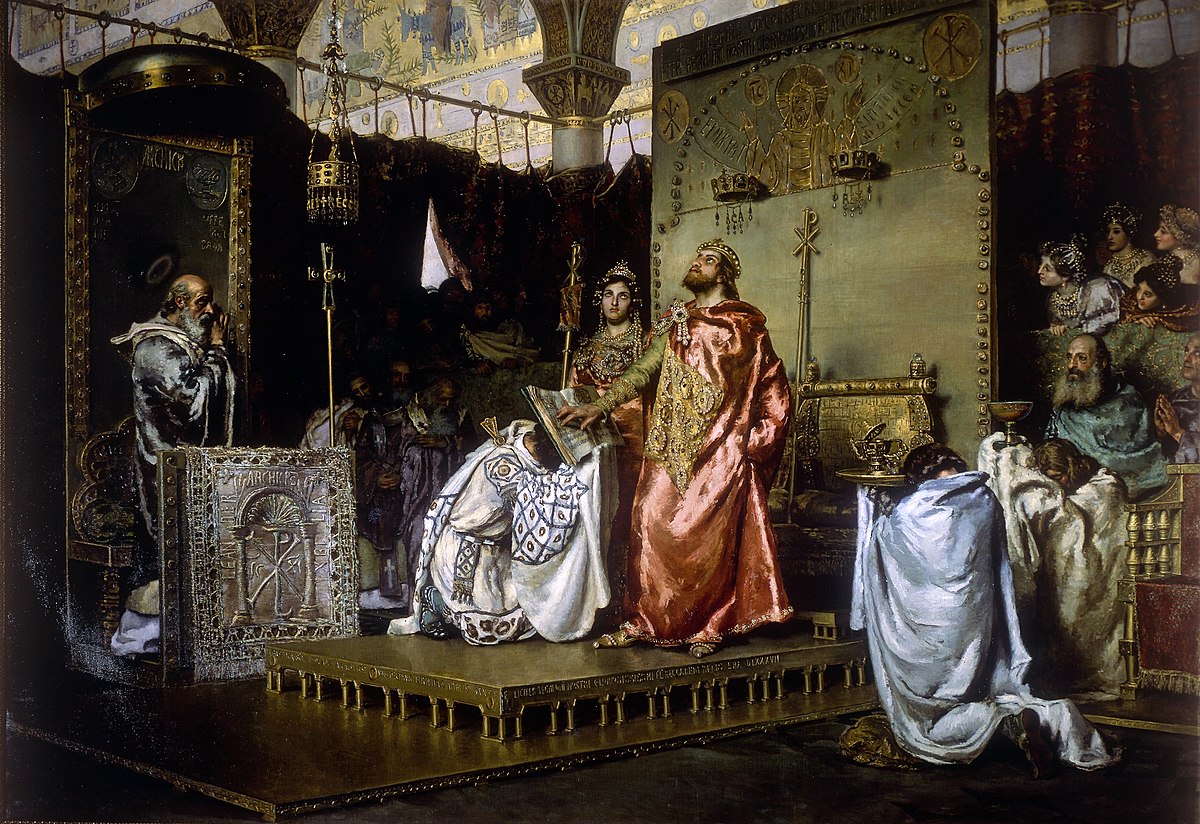
For generations, the Visigothic rulers of Spain had followed Arian Christianity, which treated the Son as less than fully God. In 589, King Reccared publicly rejected that teaching and joined the Catholic church. The council helped bring a divided kingdom into one communion. It also used a phrase saying that the Holy Spirit proceeds from the Father 'and the Son.' That local Spanish wording would later become a major point of disagreement between Eastern and Western Christians.
At a glance
- Type
- Council
- Date remembered
- 8 May, AD 589
- What kind of event is this?
- A council or settlement that changed the church's public teaching, discipline, or historical direction.
- Key line
- Arian Spain becomes Catholic Spain.
Highlights
- Reccared converted.
- Eight Arian bishops were reconciled.
- Arianism was rejected.
- The filioque appeared in conciliar form.
- Spain's church and kingdom were unified.
How it happened
What happened
King Reccared renounced Arianism at Toledo III, and the Visigothic kingdom entered Catholic communion; eight Arian bishops are traditionally counted among those reconciled.
The argument
The council resolved the kingdom's Arian-Catholic divide and confessed Nicene faith in a Spanish setting, making the old Arian controversy politically visible in the West.
What changed
Visigothic Spain became officially Catholic, and the filioque appeared in conciliar form.
Why it matters
Toledo shows that Arianism still mattered in the West long after Constantinople I.
Aftermath
The filioque would later become one of the central disputes between East and West.
People in the story
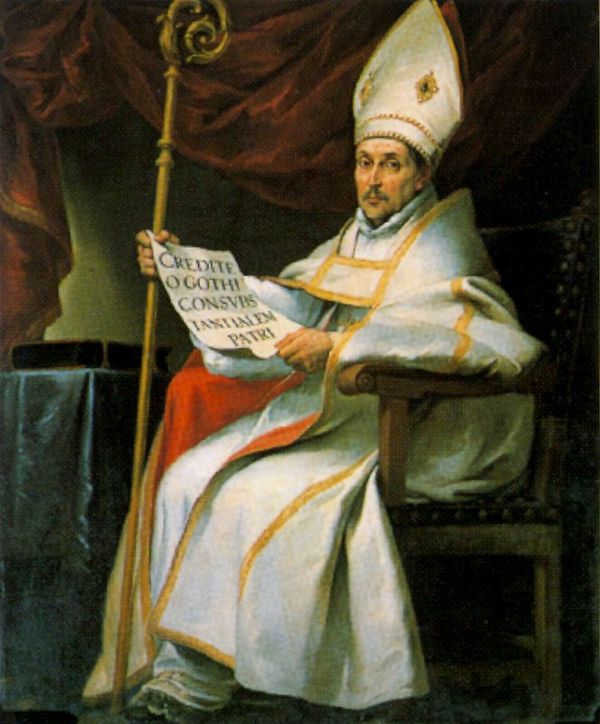 Leander of Sevillec. 534 – c. 600Archbishop of Seville and elder brother of Isidore. Friend of Gregory the Great (met in Constantinople). Instrumental in the conversion of the Visigothic kings from Arianism to Catholic Christianity at the Third Council of Toledo (589).
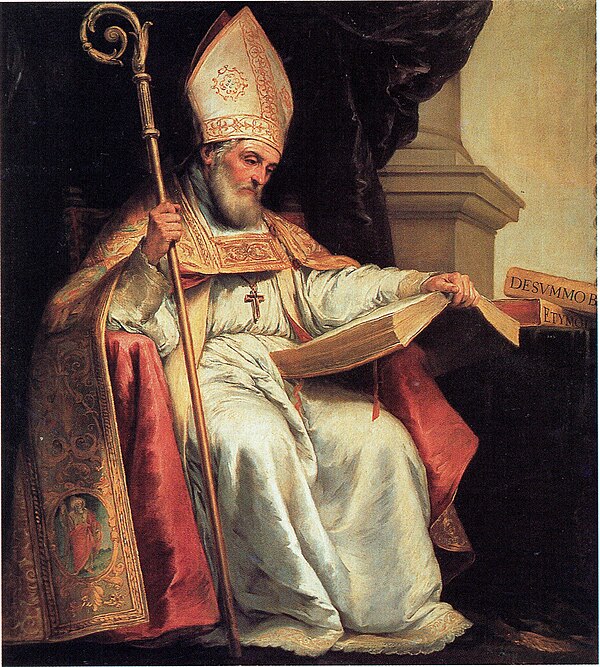 Isidore of Sevillec. 560 – 636Archbishop of Seville and last of the Latin Fathers. Encyclopedist whose Etymologiae preserved classical learning for the Middle Ages. Presided at the Fourth Council of Toledo (633).
Recommended reading
Primary texts from figures tied to this event.
Isidore of Seville
Etymologies · 627
Twenty-book encyclopedia preserving classical learning — patron of the internet was named for a reason.