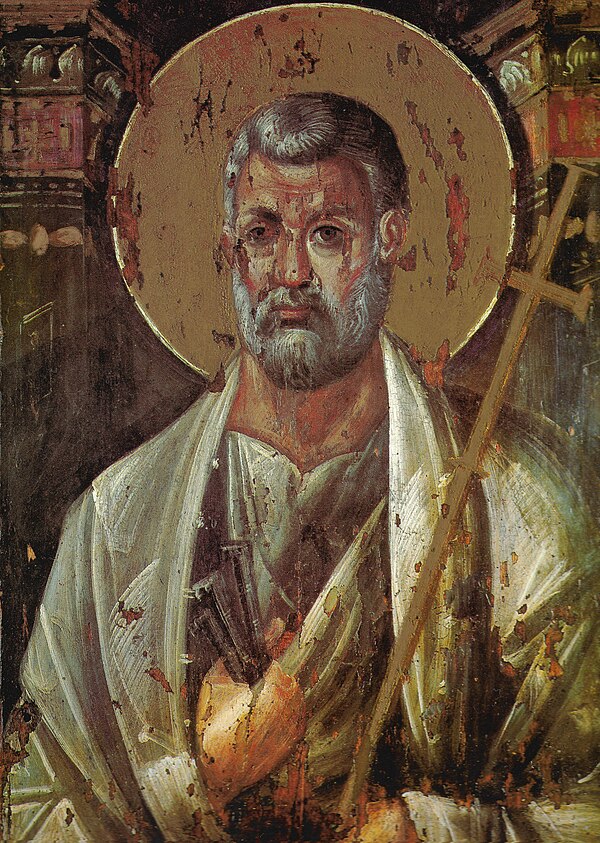
Peter
c. 1 – c. 64 · b. Bethsaida · Bishop of Rome
ApostleBishopMartyr
Quick facts
- Born
- c. 1, Bethsaida
- Died
- c. 64, Rome
- See
- Rome
- Region
- palestine
- Era
- apostle
- Significance
- Apostolic / Christ(4/4)
- Also known as
- Simon Peter · Cephas · Simon bar Jonah
Highlights
- Main contribution
- Peter is the apostle whose failure and authority sit side by side.
- Event connection
- Council of Jerusalem (50)
- Primary source
- Gospel of Matthew 16:13-19
Chief of the Twelve Apostles. Fisherman from Bethsaida; preached at Pentecost, traveled widely, and traditionally martyred in Rome under Nero. Counted by Roman tradition as first bishop of Rome.
Why Peter matters
Peter is the apostle whose failure and authority sit side by side. He confesses Christ, misunderstands the cross, denies Jesus, is restored, preaches at Pentecost, and helps lead the church through the Gentile question in Acts. That mix is why later debates about authority, repentance, episcopacy, Rome, and unity keep returning to him. Tradition remembers him as martyred in Rome under Nero, and the churches of East and West both treat him as one of the central apostolic witnesses.
Chain to Jesus
Loading…
Common questions
- Who was Peter?
- Peter (1–64) — Chief of the Twelve Apostles. Fisherman from Bethsaida; preached at Pentecost, traveled widely, and traditionally martyred in Rome under Nero. Counted by Roman tradition as first bishop of Rome.
- Who taught Peter?
- Jesus of Nazareth.
- Who did Peter teach?
- Mark the Evangelist and Clement of Rome.
- Who did Peter meet?
- Paul of Tarsus.
- Who did Peter oppose?
- Paul of Tarsus.
- Who did Peter succeed as bishop of Rome?
- Jesus of Nazareth.
- Who succeeded Peter as bishop of Rome?
- Linus of Rome and Evodius of Antioch.
Sources for biography
- Gospel of Matthew 16:13-19 primary
- Acts of the Apostles 1-15 primary
- 1 Peter 1:1 primary
- Eusebius, Hist. Eccl. 2.25 primary
- Irenaeus, Adv. Haer. 3.3.2 primary
documented connections(3)
- taught by Jesus of NazarethPeter is called by Jesus and named chief of the Twelve in all four Gospels.Gospel of Mark 1:16-18 · Gospel of Matthew 16:13-19
- met (incoming) Paul of TarsusPaul visited Cephas in Jerusalem for fifteen days c. AD 36 (Gal 1:18). They later met at the Apostolic Council (Gal 2 / Acts 15).Galatians 1:18; 2:1-10 · Acts of the Apostles 15
- opposed (incoming) Paul of TarsusThe Antioch incident: Paul publicly rebuked Peter for withdrawing from Gentile table fellowship under pressure from 'men from James' (Gal 2:11-14).Galatians 2:11-14
tradition connections(5)
- taught by (incoming) Mark the EvangelistPapias (c. 110-130) reports Mark was Peter's interpreter and recorded Peter's preaching as the Gospel of Mark — but Papias' testimony itself survives only via Eusebius. 1 Peter 5:13 mentions 'Mark my son' but does not establish discipleship.Papias in Eusebius HE 3.39.15 · 1 Peter 5:13 · Irenaeus, Adv. Haer. 3.1.1
- succeeded in see (incoming) Linus of RomeIrenaeus' succession list names Linus as the man to whom 'the apostles' (Peter and Paul) committed the Roman episcopate. Episcopal succession lists for 1st-c Rome were reconstructed by Irenaeus c. 180 (Adv. Haer. 3.3); not contemporaneously attested.Irenaeus, Adv. Haer. 3.3.3 · Eusebius, Hist. Eccl. 3.2
- succeeded in see (incoming) Evodius of AntiochEusebius lists Evodius as first bishop of Antioch after Peter. Peter's actual episcopal tenure at Antioch is traditional rather than narrated in scripture.Eusebius, Hist. Eccl. 3.22
- taught by (incoming) Clement of RomeTertullian (De Praesc. 32) says Clement was ordained by Peter. Origen and others identify him with the Clement of Phil 4:3. No first-person testimony survives — marked tradition per the brief.Tertullian, De Praescriptione 32 · Jerome, De Viris Illustribus 15
- succeeded in see Jesus of NazarethRoman Catholic tradition treats Peter as Christ's vicar / successor in pastoral leadership of the Church (Matt 16:18-19); not framed as episcopal succession in the New Testament itself.Gospel of Matthew 16:18-19 · Gospel of John 21:15-17
External resources
📖WikipediaFull encyclopedic biography with footnotes and further reading.🔗WikidataStructured data hub linking to library catalogues, archives, and academic sources worldwide.🏛️WikisourcePublic-domain primary texts and translations (search).⛪Catholic Encyclopedia1913 reference — long entries, useful for less-known figures (search for Peter).